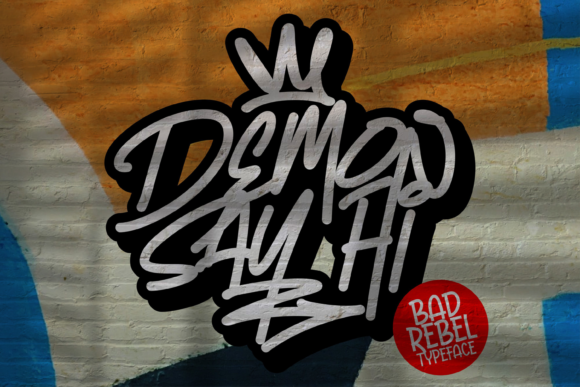
Demon Say Hi: The Rebel Font That Brings Street Style to Your Brand
In a digital landscape saturated with clean, minimalist sans-serifs and rigid corporate serifs, there is a distinct hunger for fonts that scream personality. Enter Demon Say Hi, a display typeface that doesn’t just sit on the page—it leans against the wall, hands in pockets, looking like it knows something you don’t. This isn’t your grandfather’s font family. It is cool, street-styled, and unapologetically rebellious. If you are looking to inject raw energy into your visual identity, Demon Say Hi offers a toolkit of glyphs and ligatures designed to make heads turn.
More Than Just Letters: A Visual Attitude
When we talk about "street style" in typography, we aren't just referring to graffiti tags or messy scrawls. We are talking about structure meets chaos. Demon Say Hi captures the essence of urban culture—the grit of concrete, the flash of neon signs in rain-slicked alleys, and the boldness of limited-edition drops. It is a display font, meaning its primary job is to grab attention at large sizes. It is not meant for body text; it is meant to be the headline that stops the scroll or the logo that anchors a brand.
The character set is where this font truly shines. Because it is PUA (Private Use Area) encoded, accessing its full potential requires a bit of know-how, but the payoff is worth the effort. PUA encoding allows designers to map custom glyphs, ligatures, and alternate characters to specific key combinations. For the average user, this might sound technical, but for the creative professional, it means unlimited customization. You aren't stuck with one version of the letter "A"; you have access to a library of stylized variants that can shift the tone of your message from aggressive to playful in seconds.
Where Demon Say Hi Fits in the Real World
Understanding the theory behind a font is one thing; knowing where to use it is another. Demon Say Hi is versatile within its niche. It thrives in environments where breaking the rules is part of the brand promise. Here is how different industries and creators are leveraging this typeface to stand out.
Fashion and Apparel Design
The most obvious home for Demon Say Hi is the world of fashion. Whether you are designing graphic tees, hoodies, or sneaker collaborations, this font brings an immediate sense of edge. Imagine a black t-shirt featuring the phrase "Stay Wild" rendered in Demon Say Hi. The jagged edges and unique ligatures transform simple words into a wearable statement piece. It works exceptionally well for streetwear brands that want to communicate authenticity and non-conformity. Unlike standard gothic fonts that can feel dated or overly dark, Demon Say Hi has a modern, polished rebellion that appeals to Gen Z and Millennials alike.
Sportswear and Athletic Branding
Athletics is about power, speed, and impact. Demon Say Hi mirrors these qualities through its dynamic shapes. For sportswear labels, using this font on packaging, jersey designs, or promotional banners creates an instant association with high-energy performance. It looks great in bold, blocky layouts that mimic the intensity of competition. Brands focusing on extreme sports, skateboarding, or urban fitness find that this typeface resonates with their audience because it feels active rather than static.
Event Marketing and Concert Posters
If you are promoting a music festival, a club night, or an underground art exhibition, traditional typography often falls flat. Demon Say Hi provides the visual noise needed to cut through the clutter of social media feeds. Its irregularities catch the eye, making posters and digital ads more memorable. When paired with vibrant colors or high-contrast photography, the font amplifies the excitement of the event. It suggests that whatever is happening is going to be loud, lively, and unforgettable.
Logo Design for Creative Agencies
For marketing agencies, design studios, or coffee shops aiming for a hipster aesthetic, a custom logo is crucial. Demon Say Hi can serve as the foundation for a distinctive logotype. By utilizing its unique ligatures, designers can create monograms or wordmarks that are difficult to replicate. This uniqueness helps build brand recognition. However, it requires careful handling to ensure legibility while maintaining the font's rugged charm.
Practical Considerations Before You Download
While Demon Say Hi is a powerful tool, it is not a one-size-fits-all solution. Before integrating it into your next project, consider the following practical aspects to ensure you get the best results.
- Readability vs. Style: Display fonts are designed for impact, not endurance. Avoid using Demon Say Hi for long paragraphs of text. It should be used for headlines, titles, logos, and short phrases. Overusing it can fatigue the reader and dilute its special effect.
- PUA Encoding Complexity: As mentioned, this font relies on PUA encoding. This means you cannot simply type "Demon Say Hi" in Word and expect the cool ligatures to appear automatically. You will need to use a font editor or a specialized input method to access the alternate glyphs. If you are working with clients who may not have the font installed, ensure you outline the text or provide a PDF preview so the design remains intact.
- Pairing with Other Fonts: Because Demon Say Hi is so visually dominant, it needs support. Pair it with simple, neutral sans-serif or serif fonts for secondary information. Let the rebel font do the talking while the supporting text provides clarity and context. A clean Helvetica or a classic Garamond can balance the chaos of Demon Say Hi effectively.
- Color and Context: The font’s attitude changes based on color. Black on white gives it a stark, serious vibe. White on black feels nocturnal and mysterious. Bright neon colors injected into the design can make it feel energetic and youthful. Experiment with backgrounds to see which mood aligns with your message.
Why Choose Demon Say Hi Over Similar Fonts?
The market is flooded with "grunge" or "brush" style fonts. So why pick Demon Say Hi? The answer lies in its cohesion and versatility. Many similar fonts feel disjointed, with some letters looking polished and others looking intentionally broken. Demon Say Hi maintains a consistent internal logic despite its rebellious exterior. The ligatures are thoughtfully designed, creating connections between letters that feel organic rather than forced.
Furthermore, the PUA encoding is a significant advantage for advanced users. Instead of installing multiple variations of the same font, you get a single file that contains dozens of stylistic options. This streamlines your workflow and keeps your project files lightweight. It also ensures consistency across different platforms, as all the necessary glyphs are contained within one package.
Final Thoughts on Using Rebel Typography
Using Demon Say Hi is about more than just selecting a font from a dropdown menu. It is about adopting a mindset. It is about recognizing that sometimes, the message needs to be shouted rather than whispered. Whether you are a seasoned graphic designer looking to refresh your portfolio or a small business owner trying to carve out a unique identity, this font offers a shortcut to credibility in the street style genre.
Remember that good design is always contextual. While Demon Say Hi is undeniably cool, it must serve the purpose of the communication. Use it when you want to convey strength, creativity, and a break from the ordinary. When used with intention and respect for readability, it transforms ordinary designs into extraordinary experiences. In a world of sameness, being a little bit demon might just be exactly what your brand needs to say hi.