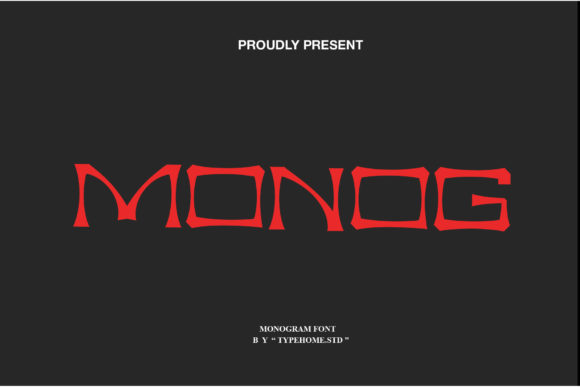
Monog Display Font Evaluation
In the landscape of digital typography, selecting the right typeface is rarely just about readability; it is often about establishing an immediate visual identity. For designers seeking a distinct aesthetic that bridges modern geometric precision with rustic Western charm, Monog has emerged as a notable option. This article provides an objective evaluation of Monog, analyzing its design characteristics, potential applications, and practical considerations for those researching display fonts.
Understanding the Monog Typeface
Monog is classified primarily as a display font, meaning it is designed to be used at large sizes rather than in body text. Its defining characteristic is a unique fusion of two seemingly disparate styles: clean, mathematical geometry and rugged, Western signage aesthetics. The letters are constructed with sharp angles and uniform stroke widths, reminiscent of mid-century modernist design, yet they incorporate subtle flourishes and structural quirks that evoke the feel of old-world saloon posters or vintage travel brochures.
The "cool" factor associated with Monog stems from this juxtaposition. It avoids the cliché of overly ornate script fonts often used for Western themes. Instead, it offers a streamlined, contemporary interpretation of the genre. This makes it particularly appealing to brands looking to project confidence, nostalgia, or a sense of curated authenticity without appearing dated or messy.
Key Design Characteristics
To determine if Monog fits your project, it is essential to understand its structural components:
- Geometric Construction: The backbone of the font relies on circles, squares, and straight lines. This gives the typeface a sense of stability and order, making it highly legible even when stylized.
- Western Influence: Elements such as flared serifs or angled terminals provide the thematic flavor. However, these are integrated subtly, ensuring the font remains versatile rather than costume-like.
- High Contrast Potential: Because Monog is a display font, it performs best when contrasted with simpler, sans-serif body copy. Its bold personality demands space and silence around it to shine.
Evaluating Use Cases and Applications
When researching fonts, the primary question should always be: where will this live? Monog is not a Swiss Army knife; it is a specialized tool. Below are scenarios where Monog proves to be a strong fit, alongside situations where it may fall short.
Strong Fits for Monog
- Brand Identity for Lifestyle Brands: Coffee shops, craft breweries, outdoor apparel companies, and boutique hotels often seek a vibe that feels both adventurous and refined. Monog’s geometric-Western blend captures this "modern frontier" aesthetic effectively.
- Event Posters and Flyers: For music festivals, rodeos, or cultural events that want to avoid traditional cowboy clichés, Monog offers a graphic punch that grabs attention on social media feeds and printed materials alike.
- Packaging Design: Products aiming for a premium, artisanal look can benefit from Monog’s distinctive character. It stands out on shelves because it does not rely on standard corporate typography.
- Short-Form Digital Content: Headers for blog posts, YouTube thumbnails, or Instagram stories can leverage Monog to create instant visual interest. Its readability at small-to-medium sizes (for headlines) makes it functional for digital interfaces.
Situations Requiring Alternatives
Despite its strengths, Monog is not suitable for every context. Designers should consider alternatives in the following scenarios:
- Long-Form Body Text: Using Monog for paragraphs of text will cause eye strain and reduce comprehension. Its decorative nature is too high-contrast for sustained reading.
- Corporate Formality: If the goal is to convey strict professionalism, legal authority, or medical trustworthiness, Monog’s playful geometry may undermine the message. A neutral sans-serif or serif would be more appropriate.
- International Markets: While English speakers may appreciate the Western nuance, audiences unfamiliar with this cultural context might find the style confusing or overly niche. In global campaigns, clarity often trumps stylistic flair.
Benefits and Tradeoffs
No typeface is without compromise. Understanding the tradeoffs helps in making an informed decision.
Benefits
The primary advantage of Monog is its distinctiveness. In a market saturated with generic geometric sans-serifs like Helvetica or Montserrat, Monog offers a recognizable voice. It allows designers to communicate mood quickly. Furthermore, its geometric base ensures that it pairs well with a wide variety of complementary fonts, particularly humanist sans-serifs or clean slab serifs.
Tradeoffs
The main limitation is versatility. Because Monog is so specific in its style, it cannot easily pivot between moods. It is either cool and Western or it is not. Additionally, depending on the specific weight or version available, kerning issues may arise with certain letter combinations, requiring manual adjustment by the designer. This adds time to the workflow compared to more robust, all-purpose type families.
Practical Decision-Making Insights
If you are currently evaluating Monog against other display fonts, consider the following checklist to ensure alignment with your project goals:
- Define the Mood: Does your brand need to feel rugged yet modern? If yes, Monog is a strong candidate. If the brand needs to feel friendly, soft, or ultra-minimalist, look elsewhere.
- Analyze the Hierarchy: Ensure you have a plan for pairing. Monog should likely serve as the headline or accent font, supported by a highly readable secondary typeface.
- Test at Scale: Always preview Monog at the exact sizes it will be used. Display fonts can behave unpredictably when scaled down too far or blown up too large without proper spacing adjustments.
- Consider Licensing: As with any commercial font, verify the licensing terms. Some display fonts have restrictions on how many impressions or devices they can be used on. Ensure the license matches your distribution plan.
Conclusion
Monog represents a sophisticated intersection of geometry and Western heritage. It is not a utility font but a statement font. For designers tasked with creating memorable, high-impact visuals for lifestyle, entertainment, or creative industries, Monog offers a compelling solution that balances novelty with structural integrity. However, its success depends entirely on context. When used sparingly and paired correctly, it can elevate a design from ordinary to exceptional. When misapplied, it risks appearing gimmicky. By carefully assessing the tonal requirements of your project, you can determine whether Monog is the right tool to bring your vision to life.